Powered by Blogger.

One (Kind) Kindergarten

Hello and welcome back to cycle three of my posts on teaching mathematics in a task-based classroom! This week, I will be talking about how the "formative five" allow teachers to assess tasks in the classroom.

When I am preparing a task for my classroom, I first create a rubric (pictured above). I consider what the goals of the task are: are students generating ideas about how to solve a new type of problem? Are we solidifying understanding they should already have? Are they creating a new representation or algorithm? I do not always use all 4 pieces of the rubric, but instead use the ones that align most closely with my mathematical goals. I define each of these at a beginning, developing, accomplished, and exemplary level.

Conceptual understandings refer to the actual extent to which students understand the mathematics, as evidenced by their work and explanations. Justification and thinking I separate from this, as it refers more to the level of thinking presented in a students answer and in the discussion phase. When developing a rubric, consider the possibility a student is valiantly defending a wrong answer. While their conceptual knowledge might be low, their justification and thinking may still be high-level. I consider the terms and notations (equations, use of correct vocabulary) and the use of tools when applicable (ten frames, hundreds charts, fingers, etc.).

Once I have aligned the task to the mathematical goal, I am ready to think about how I will formatively assess to determine student progress. This is where the "formative five" come into play:

1. Observation: Usually a simple check list, this type of formative assessment allows teachers to quickly assess an entire class or large group. Using the rubric, pick a few things you can check off as you circle the room asking assessing and advancing questions. Prepare your rubric with student names and the few things you are looking for and you can quickly note a YES/NO during the lesson. This is particularly helpful if you want a snapshot of the group of students overall.

2. Interviews: Picking 2-3 key assessing and advancing questions, zero in on students you are seeking to understand better. Record their answers to each, calling back to the rubric to determine how they are developing understandings of the content.

3. Hinge questions: Posed at a key moment in the lesson, a hinge question is given to the whole class. A hinge question can determine whether or not the class is ready to move on, or needs additional time to explore the content at hand. It can be conceptual or procedural. Check these answers immediately and determine next steps.

4. Exit tickets: An old favorite, an exit ticket provides the opportunity for students to show their thinking on a similar problem or problem type that they explored during the task. Graded after the lesson, teachers then determine where the next lesson needs to go.

5. Show me: An obtrusive form of assessment that happens during the lesson. Stop a few students in their work, and ask them to show you their thinking physically, on the current or a different problem. Select these students intentionally.

The task cycle requires many opportunities for formative assessments throughout to determine where the learning goes next. Using rubrics and the formative five can help closely monitor student learning towards key mathematical goals!


Yours,

Ms. M
Share
Tweet
Pin
Share
No comments


Welcome back! I am so glad you are joining in for session two, which will focus ideas for on launching mathematical tasks.

There are several goals when launching a high-quality task:

  1. Eliminate all contextual and linguistic barriers for all students so they can focus on mathematics
  2. Pose a problem
  3. Generate interest
  4. Activate background knowledge
  5. Share logistical information: how long will students have to work? How will they be working (partners, individual, etc.)?


Notice and Wonder
Great for generating interest and for students to be already considering their own questions. 
Show an image, expression, graphic, video, scenario, or representation of a mathematical idea. Draw out noteworthy elements.
Students first see all the things they can "notice" that are obvious from the artifact. Then students brainstorm a list of mathematical questions. When moving into the task, you can select one or more of these questions for students to explore.


Try One
One of the most common concerns raised by teachers is how to launch a task when students don't have the appropriate background knowledge. "Try one" is a great strategy for this because it involves attempting a problem that has similar features or requires a similar thought process as the primary task. This gives students a bank of strategies to try when they approach the task. In order to maintain cognitive demand, ensure the launch is not used to demonstrate how to do the task.


Ways of Seeing
This is essentially a number talk. Show image, expression, graphic, scenario, or representation of a mathematical idea. Pique interest, show noteworthy elements.
http://ntimages.weebly.com/photos.html has many images that can be used to launch tasks, including the one above.

Which One Doesn't Belong? (pictured at top).
Show image, expression, graphic, scenario, or representation of a mathematical idea. Students defend their thinking about which image does not belong and why. There should always be multiple correct answers for best discussion.
Wodb.ca has a ton of images and suites that can be used for this purpose already made!

Three-Read Protocol
This is a launch for word/story problems. The key element of this type of launch is to only make the problem stem available. The word problem should not have a predetermined question. It should only provide context and quantities. 
1. Read one: Teacher reads the problem stem to students. Discussion about what the story is about.
2. Read two: Choral or partner read. Students talk about the quantities in the problem.
3. Read three: Partner/choral read repeated. What is missing to make this a solvable problem?

The goal of this type of launch is to lead students to the key question: What mathematical questions can we ask about this situation?


Make a Conjecture
Students make a quick guess (without enough time to reason through the problem). This gives them something to either verify, disprove, or refine as they begin their work time to solve the problem. This strategy is particularly valuable for abstract tasks.


I hope these ideas give you a fresh way to launch your next mathematical task. Happy teaching!

Yours,

Ms. M

Share
Tweet
Pin
Share
No comments
Hello! I am so happy you are joining me for session one of A New Vision for Mathematics today. Today will be a general overview of what the math task cycle is, its effect on student learning, and the three types of tasks.


One one hand, we have our old way of mathematics: introducing a concept and its vocabulary, teaching strategies, students completing work and then (maybe...) applying to a contextual problem to extend their learning. Imagine the motivation, ownership, and learning if this process was flipped on its head.

First, students develop ideas through a real-world problem or task. Engagement is high and so is cognitive demand. The teacher provides contextual information and tools, but no clear and tried path. No math word or strategy. Students work on their own and with a partner or group--they develop ideas all around the problem. Some students show misconceptions they have about number, some draw models, some develop diagrams, some use mathematics concepts they already know to solve. Answers are both wrong and write. As a class, a rich discussion is held. What happened? Which strategies worked? Which one's didn't? The teacher provides vocabulary and draws out key concepts and mistakes to be learned from. This is known as the "developing" phase.

Next, where does the learning go? Students have many ideas about their new concept, but have not been afforded time to use all the strategies. Teachers will share a targeted concepts--i.e., today, remember what Suzy Q. explained to us yesterday about how she used place value? Let's use that concept to see if it will help us on our task today. Another launch of an engaging task, more work with more focus on a strategy and concept, another rich discussion. Students are solidifying ideas about mathematics--this is the "solidifying" phase.

Finally, students have developed and solidified all important ideas about their mathematics topic. They are ready to work on their accuracy and fluency. The teacher launches a problem string, mathematics game, or task that requires repeated reasoning. The students work and re-work the tasks, focusing on using strategies flexibly and attending to the correct answers in problems. This is the "practicing" stage, and marks the end of the mathematics task cycle.

Because students have built the knowledge themselves, they are likely to take ownership and retain it. Because they built the knowledge conceptually FIRST, they are likely to apply it and have a deep understanding. And all throughout the cycle they have been working on engaging problems and confronting their own misconceptions.

The math task cycle is powerful when teachers use it in the classroom, and can be used to ensure all students have access to deep conceptual understanding. No more "I'm not a math person..." All students can be successful in mathematics through the learning cycle.

Join me next time for a deeper dive into planning for learning in the three stages!

Yours,


Ms. M
Share
Tweet
Pin
Share
No comments

Over the past few weeks, I have been leading each grade levels planning meeting during their planning time. Each hour brings a new grade level and new challenges. This is my first time leading a PLC, and I wrote the proposal and presented it to my administrators. Although I had originally envisioned my trainings as a series of after-school meetings, my administrators offered me three professional days to take to train teachers instead. I spend all day, presenting to K-4. This has allowed me to individualize trainings based on the needs of the different grade levels. It has also allowed me to grow as a teacher and as a presenter.

This experience has been a great way for me to step out of the classroom without stepping out of the classroom. I won’t have enough teaching experience to enter coaching for another few years, but I am interested to see what coaching would look and feel like for me. If this is something I want to pursue, I would ideally have more experience across the grade levels. It is hard for me to reconcile this with my passionate love for kindergarten kids, curriculum, and difference-making. I am still wondering how I will bring these things I am passionate about together in my career. But I have a whole master’s to finish and several years to teach before I need to make any decisions!

The goal of the training was to expose teachers to the mathematics planning cycle in task-based learning, provide support in planning a task with assessing and advancing questions, and discuss formative assessment practices in the classroom.

Over the next few weeks on the blog, I will be elaborating on the training I provided the teachers at my school, and providing some key resources here. If you are interested in task-based learning for mathematics, I hope you will join me along the journey!

Session one: What is the task cycle?

Session two: How do I plan a worthwhile mathematics task?

Session three: Where and how do I assess students?

Yours,


Ms. M

Share
Tweet
Pin
Share
No comments
Welcome back to the blog--I want to talk a little about our mornings today. In my class, there are about 15 minutes from 7:45 to 8:00 where students are in the classroom, but instructional time has not started yet. 

As teachers, we are doing 1 million different things in the morning. Greeting students, accepting notes, collecting forms and money, taking attendance, comforting students, finding breakfasts, and hearing tidbits students have been holding onto since the last time they saw you. Students need to be doing something that is engaging, high-yield, and independent. For me, I hate using paper and making traditional morning work copies, but I also didn't want to go the route of making morning tubs/boxes that would require changing out, upkeep, and planning. I wanted something paperless that would benefit ALL students.

Enter the paperless morning routines! All my students do is come in, grab their journals, and write a sight word sentence with a fill-in-the-blank. This helps students practice sight words, learn new vocabulary, and learn about sentence structure. 15 minutes is the perfect amount of time to fill in the sentence and draw a picture to match. There is also virtually 0 clean-up time required!

For accountability, I call over 1 table each day and give them a smelly sticker or a happy face on their paper for completed work. Students never know which table I will check, so they are motivated to get their work done. They also love the simple pictures and are excited about their topics each day.

For me, no copies, no materials, no prep. Just a PowerPoint slide!

I hope this very simply idea inspires you in your own classroom to simplify your mornings without sacrificing learning!

Yours,

Ms. M
Share
Tweet
Pin
Share
No comments
I love teaching comparing numbers and quantities every year in kindergarten! In kindergarten, these two standards address what kindergartners need to know and do to master number and comparisons:

CCSS.MATH.CONTENT.K.CC.C.6
Identify whether the number of objects in one group is greater than, less than, or equal to the number of objects in another group, e.g., by using matching and counting strategies.1
CCSS.MATH.CONTENT.K.CC.C.7
Compare two numbers between 1 and 10 presented as written numerals.
I developed some tasks that are designed to make sure your students go beyond "this one is bigger because 5 is bigger than 3." Ideally, I want my students to masters at least three strategies that they can defend to compare numbers: counting, matching one to one, and using a number path (number line or 100s chart). This is a great task to begin with. Students don't need any formal knowledge of comparing to be successful. Check in with their strategies as you walk around the room to see which strategies students are using. Pick students to present their ideas to the group. During presentations, you can provide the vocabulary (greater than, less than, and equal to). I also let students name the strategies they used--they called them "count," "matching," and "number line."

After completing the tasks and solidifying the strategies used in the tasks, your students might be ready for more of a fluency piece. You can have students partner up to roll dice and compare sets, have them roll and build a greater than, less than, and equal to set, or play "guess my number" while giving less than, equal to, and greater than hints (i.e. "My number is less than 18. My number is greater than 12. What is my number?"). I gave my students number lines to play this game so they could show me their guess.


Compare away! And download 3 comparing tasks below: 
Download Comparing Tasks

Love,

Ms. M

Share
Tweet
Pin
Share
No comments


I am so proud of the littles around this time of year. They are developing so well in their reading and writing skills, all at their own perfect paces.

Kids start to really pay attention to letters and sounds at this stage. They notice when one friend has a "long word" and they begin to venture out into spelling multi-syllabic words. I find this is the perfect time to begin introducing students to sound and spelling patterns that will serve them now that they have even MORE to say!

-ar is a good jumping off point for students because it is in a ton of words that are familiar to them that they might want to use--car, jar, star, start, cart. They will have a blast brainstorming other words that they can hear the sound in--and making up nonsense words with the sound as well.

I introducing the sound and spelling pattern using my district's sound cards which include a phrase "The big dog is barking /ar/ /ar/ /ar/" you can pair with a picture of a dog barking and a hand motion.

You can practice skills such as differentiating words that are spelled similarly, blending onset and rime, reading sentences, segmenting words, etc., throughout the week as you spend between 5-10 minutes reviewing the sound and spelling pattern. Even students who aren't quite ready to use it in their writing will benefit from the exposure and practice.

I love these PowerPoints to get this in to my daily phonics routine. I hope you find them helpful!

Love,

Ms. M

Get the -ar PowerPoint here!
Share
Tweet
Pin
Share
No comments


Last year, I designed the classroom of my dreams. My first two years, everything in the classroom was reflective of being a first-year teacher with a tiny budget and using what was already around. My colors were red, blue, and yellow. My classroom was cute enough to get by, but it wasn't what was in my heart.

My classroom this year reflects who I am so much more closely! Everything is in ROYGBIV order, clean lines, multicolored on a black or white background, and in my favorite font. This is because I designed all the pieces myself!


Today, I am sharing the watercolor ABCs I made. This ABC posters feature all letters and the short sounds for all vowels.


I hope you can get some use out of these ABC posters, and more importantly I hope your classroom is a place you feel safe & happy this year and throughout your career!

Download watercolor ABCs

Love, 

Ms. M

Share
Tweet
Pin
Share
No comments


Differentiating is one of those oft-used terms in modern education that gets thrown around. I remember in college, differentiation would feel essential, and as I began to plan lessons for my internships, student teaching, and first class it would become time-consuming and exhausting. Every child is so unique and special--how can one teacher serve every student in the class?

Turns out, differentiation doesn't always require hours of planning...sometimes it takes your grade-level assignment and just a few tools:
  • post-it notes
  • yellow highlighter
  • pen
In kindergarten, I find that these three simple tools provide endless ways to differentiate for students at varying levels of English proficiency and skill level. Sticky notes can provide a sentence frame to get started, a quick word bank, or a model for students who are reversing or struggling with getting a sight word. Highlighters can allow students to state an idea that they are not yet able to write--for example, students who enter without any phonics/phonemic awareness skills. They can trace over words or letters to write their ideas. You can use a pen to draw _____ for each word a student wants to write. You can further differentiate by helping students remember what they wrote by filling in a beginning or ending sound as needed. The pen is also helpful as students dictate their writing to you!

Sentence frames, word banks, phonics support, blanks, models, and word support--you can have differentiated supports at multiple levels all with just three tools!


Love,

Ms. M

Share
Tweet
Pin
Share
No comments

It's coming up on testing season in the early grades. Every time I hear the term "non-tested grade" I want to go crazy. We test, and test, and test these littles!

In the span of a few weeks, my kiddos will best tested using Fast, MAP, text-leveled assessments, and WIDA ACCESS. In addition to needing assessed on kindergarten year-long skills at regular intervals PLUS 4-5 assessments in subject areas every week (grades for reading, writing, math, science, social studies!)

As an EL teacher, ACCESS is at the forefront of my mind. I don't want to "test-prep" in the sense that they score higher on the test than their actual proficiency, but I do want to expose them to the types of items they will encounter beforehand so the test accurately measures what they are able to do, and not their test-taking ability.

ACCESS for kindergarten is given one-on-one, and is as developmentally appropriate as a test could be for our little learners. If you have a language support block or other time with your young ELs, here are a few ideas for how to prepare them for success on ACCESS:

Reading--

  • Using a pack of picture/word vocabulary flash cards for everyday home/school items, have students tell you the items. Focus on items such as "sofa" or "jacket" that have more than one term associated. How did they know that it was a /s/ofa and not a /c/ouch? 
  • Write a list of words on the board, and spread pictures out on the carpet. Have students pick one, and hold it next to the word that it matches. Have students practice explaining their answers to the class!
  • Continue to focus on reading short phrases and sentences both in and out of context through shared reading, guided reading, and interactive read alouds.

Writing --


  • Practice name writing without nametags available to gauge who needs the most practice.
  • Practice writing the beginning and ending sounds next to pictures of words after teacher models.
  • Have students look at a picture of an event or one spread from a story and write about everything they see. Students who are at the one-word or short-phrase phase can be invited to write lists of everything they can name.
  • Have students listen to a narrative story and write each event in sequence. Expose students who are ready to the words first, next, then, and last.


Listening--

  • Have students listen for pre-taught vocabulary in texts, and raise their hand when they hear the word!
  • Play "Simon Says" with increasingly more difficult directions as a class. Practice listening for things you did not directly name (i.e. touch the part of your body you use to smell!)
  • Play "hide in the room" and have them listen to put an object in a part of the classroom. Use words such as on, below, next to, or above.
Speaking --

  • Play "I have, who has" with sets of vocabulary cards such as classroom items, items in a home, or animals.
  • Show students two shapes, and have them talk about similarities and differences between them with a partner.
  • In morning meeting and share times, call attention to students who are speaking in complete thoughts or sentences. Share a sentence frame with students who need one to speak in a full sentence.
  • Praise, praise, praise the speaking efforts of students at every level. Remember that students progress differently through the domains!

Happy testing season everyone!

Ms. M
Share
Tweet
Pin
Share
No comments

At the beginning of this school year, I received some news from the state board of education. My evaluation score had errors, and the state refused to fix it. This led me down a rabbit hole of emailing people, being rerouted to new people, being disrespected, disbelieved, and down trodden. I discovered that the state commissioner of education had called kindergarten through second grade a "dumping ground" for weak teachers. I felt negative, like I had no value.

My score was never fixed, but my attitude was fixed from my own choice. I chose to forget about scores--my students are more than a number, and so am I! I decorated my new classroom with care, I carefully planned for my new students, and I declared that year three would be the #bestyearever.

...Then reality hit. I dealt with situations that were beyond my control that caused me to come home and cry nightly and feel like a failure as a teacher and as person. To be honest, some of those situations are still currently occurring at my school. I won't discuss them here to keep professional and confidential, but know I am still struggling with major issues. 

Either way, I am recommitting to the dream of the #bestyearever for me and my students. This is the year we build the best relationships, make the greatest gains, and have the most FUN together.

Bring it on, 2019!

-Ms.M
Share
Tweet
Pin
Share
No comments
Do you use the IBRDS protocol for teaching phonics? It goes like this:
I: Introduce the sound and spelling pattern
B: Blend words
R: Read sentences
D: Decodable texts
S: Spelling


This process is a simple lesson design to teach a new sound or spelling pattern, and can occur in a daily or weekly cycle. To me, it seemed such a simple organization and quickly I adapted it to start teaching my kinders about vowel teams, digraphs, and blends!


The lessons are simple, and supplement the (very little!) phonics instruction provided by my districts curriculum. Interested? Let me walk you through a week of learning.

Every day begins the same way: reviewing the sound and spelling pattern, blending words, and reading sentences with the words in context. From there, the days each focus on different areas of the IBRDS protocol, finishing with a spelling assessment to determine whether or not the kiddos have been able to apply the sound and spelling pattern in their writing!

Lets try it with /oo/ words!

Day 1: Introduce, blend words, read sentences. Focusing on introduce by creating a list or circle map of /oo/ words (students could make one with you, or you could make the writing interactive!)

Day 2: Introduce, blend words, read sentences. Focus on spelling with a whiteboard/eraser activity, where students see a picture and write the word using the new spelling pattern!


Day 3: Introduce, blend words, read sentences. Apply the phonics and spelling patterns in context, focusing more on decoding words. This is also a great day to pull out a decodable text and read it chorally or as an echo read whole-group!


Day 4: Introduce, blend words, read sentences. Play a game that allows students to decode words--either in or out of context, depending on the rest of your instruction. For /oo/, the game is included in the PowerPoint!


Day 5: Introduce, blend words, read sentences. Spelling focus, and assess. There are tons of way to make this day continue to be fun, like a celebration of learning! For oo, give your students Fruit Loops to cover up the o's on their spelling!


The one element not included in the PowerPoint is decodable texts. I am provided decodable text by my curriculum that I am prescribed to use, but am not able to share. Whatever set you decide to use in your instruction, decodable texts will help your students apply the sound and spelling pattern to reading in books. Find decodable readers or short poems that use the target sounds, or have your students search for it in any books you are reading in class!

I hope you find the IBRDS protocol useful to add to your toolbox of phonics instruction!

Find the /oo/ PowerPoint here.

Yours,

Ms. M
Share
Tweet
Pin
Share
No comments
Do you make resolutions each year? I look forward to it every December, when I reflect on my old goals and make five new ones to work towards.

I also pick a word for each year. This year my word is venture.

I have 5 goals this year:
1. Finish my master's degree
2. Dedicate 3 hours a week to One Kind Kindergarten (blog, TPT store, Youtube)
3. Find a new professional adventure
4. 100 days of yoga
5. 25 new books

For any goal that is quantifiable, I create a tracker for myself. It is so important to remember what you are working towards in life. When I get back to my students, I can't wait to see what kind of goals they will make for the five months we still have together!


link: https://www.teacherspayteachers.com/Product/New-Year-New-Goals-4279256


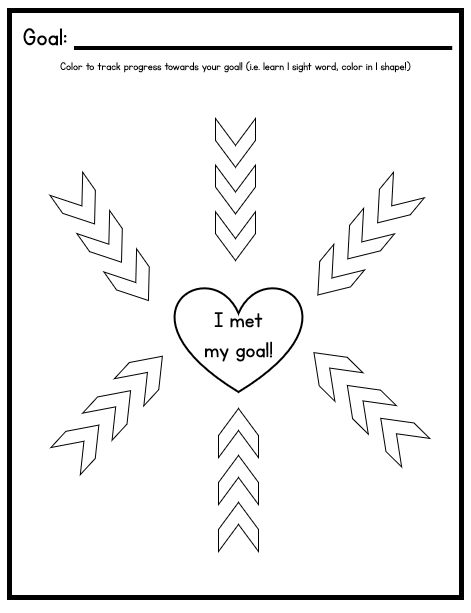
How will I go about creating goals with the little ones? I created the above product to break it down into manageable steps for them.

Day one, we will discuss what a goal is and brainstorm possible goals for the rest of kindergarten: learning 90 sight words, counting to 100 by 1's, 5's, or 10's, adding and subtracting fluently, learning all the decompositions for numbers, improving reading skills, learning all letters and sounds for my newcomers, writing a paragraph, etc.

Day two, we will talk about how people reach goals and brainstorm goal strategies. I envision my students will come up with practicing at home, and pay attention at school, but I will encourage them to think of creative ways, such as counting steps on the way to music class, or practicing sight words with a partner in the bus line.

Day three, we will talk about the steps to reaching our focus goal. While there are many things we all want to learn, we should pick a goal for be primary in our minds to track. For example, if a student picked learning the 90 sight words, we might illustrate them practicing during centers, hitting 30 sight words, using them in their writing, etc. We will also illustrate how they will feel after reaching their goal---reaching a goal is a natural reward and should fill students with pride!


Using the calendar and coloring sheet, my class can revision goals throughout the second semester. Can't wait to see what my goal getters can accomplish!
Share
Tweet
Pin
Share
No comments
Hello friends! Week seven is all planned and we have communities, asking and answering questions, research writing, describing different types of jobs, finishing our initial alphabet introduction, and counting in different arrangements within seven all up this week!

Reading:
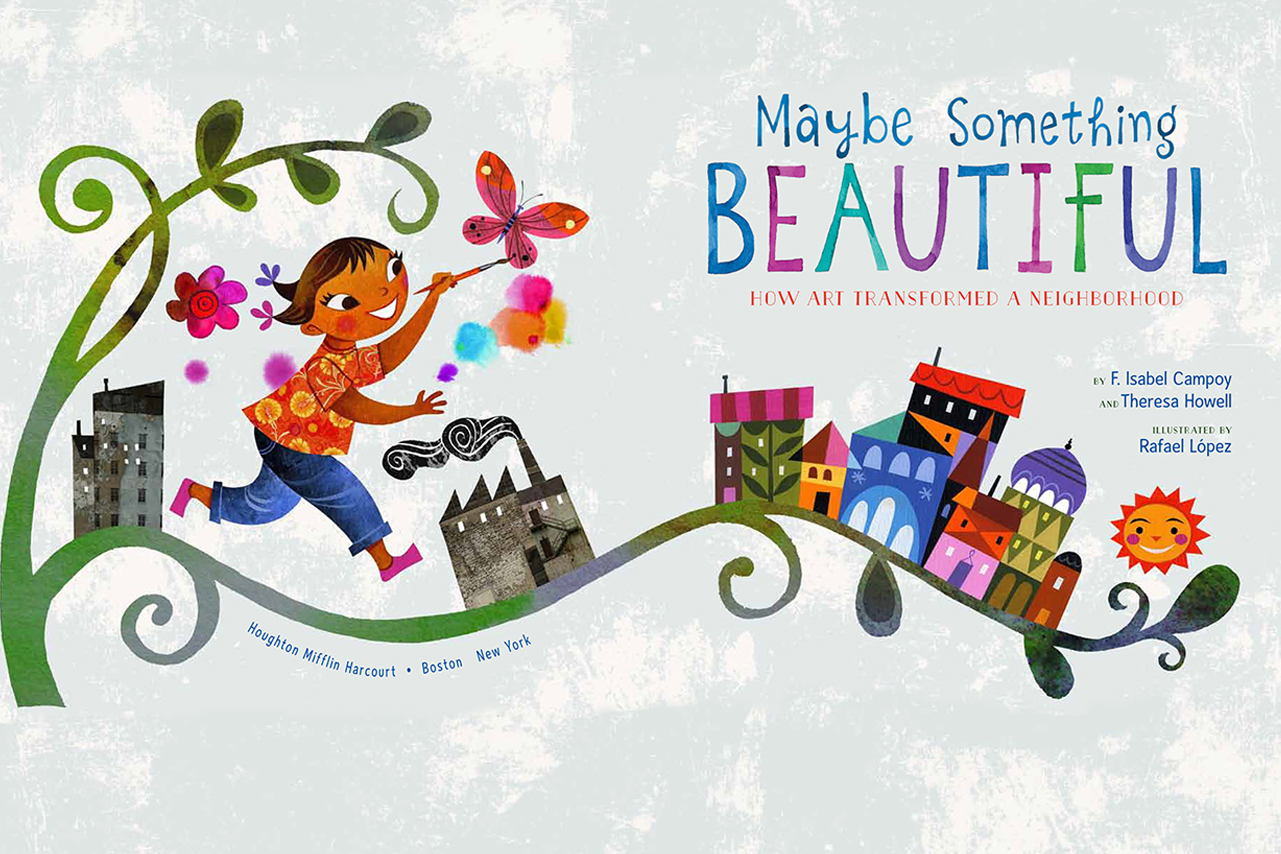
Text suggestions: Clothesline Clues to Jobs People Do, Whose Tools Are These?, Building with Dad, ABC Firefighters, Maybe Something Beautiful: How Art Transformed a Neighborhood

We will continue to work on asking and answering questions before, during, and after reading. This week, I will be assessing student ability to ask and answer questions using a checklist. However, this week we will use our questions to guide research projects about different jobs in the community. I have selected doctors, firefighters, construction workers, and artists for us to study based on student interest.


Asking and answering questions within texts is a hard skill for kindergartners. Differentiate for your non-verbal students by providing them with cards that represent questions and answers. For example, vocabulary cards that have community helpers on them will be helpful if you want students to infer from the text which helper uses the tools.

Writing:
We will use videos, a class guest speaker, and multiple texts in order to guide our research exploring new jobs. Students will use these experiences and sources to create daily writing pieces. I want them to be reflective about where they got their information, so I've added a place for them to circle where they got their information from. You can download these writing pages here.

Mathematics:


We will be counting in different arrangements 0-7: students should be able to count in a circle, line, array, or scatter. Download the quick assessment pictured above by clicking the link. We will continue to link creating number symbols using quick writes such as this Count and write Powerpoint(click to download).


Our math tasks for the week will revolve around a chef planning for a catered event. I have a launch that includes brainstorming ideas about a catered food picture that you can use to prime student's thinking. What types of math does a chef use? What do they need to count?

Step one is pictured above, and is intended to build on student knowledge of counting in different arrangements. Which arrangement will be easiest to count? Which arrangements would seat all seven people? Step two is planning materials, and step three is a counting and representing problem. Have students discuss and represent their thinking at each step! I kept numbers under seven. These tasks are intended to encourage depth and conversation, and are easily edited to suit your student's needs.

Chef Math Tasks

Happy teaching!

xo

Ms. M
Share
Tweet
Pin
Share
No comments
Happy week six of kindergarten! I actually plan these a week ahead of time, so I'm about to head into week five with my little loves. However, planning ahead has me SO excited for what this week will bring...

I have a favorite book when it comes time teach asking and answering questions, and it's Jon Klassen's This is Not My Hat. I love the simple illustrations and the creativity a reader is able to have based on what information they bring to the text. There are three vocabulary words I will pre-teach and highlight throughout the week: stole, notice, and belong.

I actually DON'T read the book the first day I teach questioning, because my students need to practice questioning first in a more familiar context. Asking and answering questions in your second language can be tricky, and many other of my student's first languages have a different structure to questions altogether. The first day, I will introduce the skill with a "mystery bag." Inside I will hide an everyday object, and they will ask questions to determine what is inside!

We will then practice the skill whole group, answering wh questions using the following resource on the SmartBoard: All About School WH Questions

Day two, we will review the skill and fill in the first third of this chart. Just from the title page and picture walk, what questions do we have about this text? I will think-aloud, and record any student questions as well. I will repeat this process for the next two days, as we re-read and create questions during reading and after reading the text.

Students will practice drawing to answer a question about a text--we will start with questions we have rehearsed answering such as "Who are the characters?" and share with a partner before recording our ideas in our journal. We will end the week with drawing to answer the main question of the text--WHAT HAPPENED TO THAT LITTLE FISH? I couldn't be more excited to teach this strategy with this text!

Writing: 
I am going to model one-to-one voice and print correspondence, which is writing production standard in my state. I plan to begin modeling writing with my students whole group. I want to teach each lesson twice: once with teacher modeling, and once with students writing dictated or interactive writing. My two lessons this week are: counting your words before you write, and re-reading what you wrote to make sure you didn't leave anything out. Day one they will see a model and begin to interact with the model, and day two of each lesson cycle they will finish the interactive part and go independently write. My students still require a lot of support and repetition, so I think this slowed gradual-release model will serve them best at this point in the year.

Mathematics:
Number writing! I don't have anything truly mind-blowing here. We will be matching numbers to quantities and doing a ton of handwriting practice so students feel confident in their ability to represent things with a number.

I will be emphasizing that numbers are a huge part of communication--we may even go on a "number walk" in the school to find examples of written numbers!

SEL:

We are on to lesson four of the Choose Love curriculum, which tackles how to deal with difficult feelings such as anger and frustration. The curriculum uses the sweetest video from Sesame Street:


I will be supplementing our SEL curriculum with I Feel Silly! by Jamie Lee Curtis, yoga from Cosmic Kids, and positive affirmations. I have a lot of kids who don't like themselves and have low self-confidence. Our transitions will be used to affirm ourselves and our abilities!


Share
Tweet
Pin
Share
No comments

I rearranged my schedule a little bit this week. I am finding that I need to use my time after lunch as my writer's workshop time, rather than before. I am going to try out this schedule this week, and see how they progress. Wish us luck!

Reading: Our theme this week is fairytales. I chose Goldilocks and the Three Bears and Goldilocks and the Three Dinosaurs as our two anchor texts this week. The latter is also an anchor text recommended by my district, but it is harder to appreciate if students are not familiar with the original story!

Using these texts, students will work to retell the major events of a story. Many fairytales have clear cut events, and are a good starting place for work with this standard.

Day one we will retell the story whole-group, using puppets. I will introduce the concept, and heavily support students verbal retelling. Day two, small groups will use storyboards to retell the story after the re-reading, and we will share out. I will offer less support for these retelling. Day three, students will use pictures from the story to sequence and orally retell, while day four I will assess their retelling with their independently created story maps.

Free Resources-
https://www.teacherspayteachers.com/Product/Goldilocks-and-the-Three-Bears-Sequencing-Assessment-Reading-Street-44-1093784
https://www.teacherspayteachers.com/Product/FREE-Goldilocks-and-the-Three-Bears-1705774
https://www.teacherspayteachers.com/Product/Story-Boards-Set-8-The-Three-Little-Pigs-Goldilocks-and-the-Three-Bears-1194112

Writing: There are two major lessons I want to instill in students this week: one, that authors use letters, words, and sentences in their stories (and those are different!). And two, building writing stamina by working the whole time. I'm not using anything fancy this week, but I will be introducing their journals and making an anchor chart whole group. I want to get back to what I LOVE about writing instruction. I really feel I've been unable to fully teach writing how I want to since I was a student teacher.

Idea from Kindergarten Chaos


Free Resources-
https://www.teacherspayteachers.com/Product/Letter-Word-Sentence-Sort-2235576'

Phonics: I am still introducing letters and doing basic oral blending and oral rhyming activities. We will map and practice handwriting for letters P, Q, R, S, and T this week!

Mathematics: This is the introduction to counting, and the beginning of the first counting unit, which will take approximately three weeks to complete. This week, I just want to build one-to-one correspondence with numbers 0-7. (Yes. 7. That is provided to me by my district). I will build conceptual understanding of this through reading texts such as Mouse Count and 10 Black Dots, and having discussion about number. We will also continue our daily number talk routine, moving through the provided sequence of dot patterns in the Number Talks book by Sherry Parrish. Our culminating math task with be the three act task linked below. I LOVE this task because it really helps students to connect with the concept that the last number stated is the answer!
Dotty


Social/Emotional Learning: I will continue with the Choose Love campaign, lesson three! Lesson three is entitled "Feelings can change!" and I am really looking forward to discussing strategies with my students.


That's all for this week, happy teaching!

Ms. M


Share
Tweet
Pin
Share
No comments


I love to create behavior interventions that kids are excited about! This one I created for a Mario-loving friend. For each part of our day he meets his goals, we color in a coin. If he earns 3 or more coins, he gets a 5 minute reward during our dismissal time (iPad, playdoh, blocks...something simple!)

I chose to make this black line so we can start fresh with a new copy each day. His mom wanted me to keep in communication about how he was doing at school, and this makes it easy for her to see how he is doing during the day!

Bonus: make a ton of copies, and put them in a pronged folder. The child is then responsible for carrying this folder during transitions (to specials for example). This keeps his hands occupied in the hallway!


The download is fully editable so you can change the goals, subject areas, and even how many coins they need to earn (I recommend to start low, and gradually increase the threshold as their behaviors improve!)

Mario Point Sheet
Share
Tweet
Pin
Share
No comments
Hello friends!

I just finished my plans for week four of kindergarten! Phew. I like to plan a full week at a time to encourage myself to make cross-curricular connections and have a even flow of learning. This week was difficult because there is a TON of content, but only four days of school! I had to juggle some things around to keep myself on track.

You will notice on my plans, I don't list guided reading or centers. I keep those plans separate from these. I have about 50 minutes per day to dedicate to guided reading and centers.

Read-aloud and Writing:

It is family and home week! We will be reading about all different kinds of families, and students will be making their own family book. I am using a free resource that comes in several different levels (link is at bottom of post!). The level with the fewest lines is still too much for my kiddos, but I am going to encourage them to try it and there is plenty of room for me to dictate this way! I am so excited to have these done by open house so they can read them to their families.


Science:

We have a dedicated 25 minute science/social studies block. We are launching this week with our first full-on science EXPERIMENT! Because I didn't want to deal with REAL worms, we will be watching an in-depth video about worms (https://www.youtube.com/watch?v=l-zc_1vjLnI) and then I will send them to their tables to examine gummy worms. I will NOT state that they are gummy worms. I want to lead them to DISCOVER the concept of living vs. nonliving. We will discuss and then I will provide the vocabulary. The five components they are supposed to know about living things is they need "food" (grade level appropriate for nutrients), move on their own (this will be fun with plants--we will talk about root movement/bending to the sun), reproduction (...), needing water, and "breathing" or needing oxygen. As we discover these concepts, I will keep an ongoing list. We will end the week with each child getting a picture of a living or nonliving item, sorting it, and justifying their choice.

Mathematics:

Phew, four days to teach positional words and three-dimensional shapes! I have tried to put a few activities in for these each day. Some of our tasks come from this amazing pack (link at bottom). The one below we will practice all together to begin to get a routine of how math tasks should look and feel in the classroom! However I also have a ton of total physical response planned for position words--each child getting a cup and bear and hiding them, putting hands all of the places (above, below, next to, beside, under, on, etc.) and then doing the same thing with FEET (it gets very silly). We will also do a 3D shape hunt by cutting out magazine photos.


Social/Emotional Learning:

We are all special and different human people, and we will share more about ourselves during morning meeting times this week. However, we will mainly be focusing on lesson two of our Choose Love Curriculum, which is about having the courage to share your feelings. We will be playing a TON of feeling charades, sharing feelings, and practicing calm-down strategies. We will illustrate a feeling ourselves, and I hope to get pictures of the students for a class feelings book made this week. We will get out our calm-down kit and practice it all together a few times. Practice makes perfect!


Please see the links below to find these resources, and let me know any questions or suggestions you have!

xo,

Ms. M


Free resources:
Learn more about the Choose Love Movement, and check out the (free) lesson plans!
https://www.jesselewischooselove.org/
https://www.teacherspayteachers.com/Product/Objects-in-the-Environment-Math-Tasks-and-Exit-Tickets-2983013
https://www.teacherspayteachers.com/Product/Living-and-Nonliving-Things-for-Kindergartners-2429520
https://www.teacherspayteachers.com/Product/All-About-My-Family-Writing-Book-Template-for-K-2-FREE-2932909
https://www.teacherspayteachers.com/Product/12-3-A-Calmer-Me-Self-Regulation-Calming-Strategies-3110932


Share
Tweet
Pin
Share
No comments
In my last post, I shared some whole-group name-games I have picked up over the last couple of years. However, students also have to learn to read and write their names as quickly as possible when they get back to school!


Here are some of my favorite classroom routines and activities we use to get name writing!

1. Dry-erase sleeves: Download a tracer font, and write their name several times on a piece of paper. This is re-usable and can be done whole-group. After we practice it several times and they know how to use the dry-erase markers, this becomes the very first activity at writing center!

2. Trace their name with items/paint: Write their name on a half piece of construction paper. They can cover it up to write their name with small stickers, bingo daubers, or q-tips and paint depending on what you have on hand. These become easy first art projects to hang up in the classroom and display their names!

3. If you are brave...You can also do the above with cereal or small ripped pieces of paper. Depending on your students, you can allow them to use the glue or you can walk around with a bottle and have them do one letter at a time.

4. Rainbow Tracing: I make them a tracer page with their name written seven times. We watch each color song on YouTube in rainbow order. We listen to the song for the letter red, everyone holds up their red crayon, and we trace our names in red. We repeat for all other colors or as long as their attention is held!

5. Pocket Chart: I make a set of all their names on sentence strips. I put one set of the full class names at the Pocket Chart center with cards that say "I am" and a "." for the end. They can build "I am (Michelle)." and repeat for all their friends names. Then they can take turns being "teacher" and reading the sentences.

6. Tweezers: Using a sentence strip, you can provide them with plastic tweezers and they "trace" their name with cereal, cotton balls, buttons, pom-poms, or anything else small. This helps them build their hand muscles to better write their names! This is a good first work work center to start the year as well.

7. Name Puzzles: There are good templates for this on TPT, but it is just as simple to write their name on a sentence strip and cut apart each letter yourself! Then they take it apart and put it back together. I give each student a box that has their name puzzle, and magnetic letters to build their names, as well as a laminated sentence strip they can use as a guide.

8. Chicka-Chicka Boom Boom: Get foam letters and have them stick them on a coconut tree craft you make after reading the story. I pre-place letters that will be needed for the names in a bag by table--for example, if I have "Lucy", "Meg", "James", and "Quentin" at a table, their letters will all be mixed in one bag. This way they still have to search for the correct letters, but it is less time-consuming and frustrating!

9. Post-it-Note Puzzle: Make them a name puzzle with post-it notes. They can build their names, or stick the letters on an ABC line to begin to identify the letters in their names!

10: Fun-stuff!: Think about what you have around already in your classroom and let them build their names: sand, salt trays, colored rice can be placed in bins. Play-doh is fun if you teach them how to roll it out and create letters! Any small manipulative (mini-erasers are perfect for this!) you have on hand you can place at a table, give them a name-tag or sentence strip to use as a guide, and let them explore! You can rotate materials between tables and create your first center rotation with this early in the year.


Happy name writing!

Ms. M
Share
Tweet
Pin
Share
No comments
Hello friends! Every week, I pick a social-emotional learning focus for my class. This week, my big idea was been building a sense of belonging: and the skill we focused on was using names when addressing others. Are you working on names and name recognition in your class? Here are a few of my FAVORITE whole group activities for the first week or two.


These are a great way to get all students using the names of others in your class, and are fun for morning meeting or any time!

1. Who Stole the Cookies from the Cookie Jar: Have all students chant/sing. When you get to the end, have the student say the name of the person sitting next to them and repeat!

"Who stole the cookie from the cookie jar? (Michelle) stole the cookie from the cookie jar! Who me? Yes you! Couldn't be. Then who?"

2. In the Box: Have a child in the middle of the circle. Ask them if you can cover them up with a box, blanket, jacket...something you have available! (Some student will not want to be covered up. I always give them a choice. They can either skip their turn OR just not be covered up when it is their turn.) All students chant: "(Michelle) in the box...sits so still. Will she come out? Yes she will!" At the end, pull off the box to reveal the student popping out! Repeat for all students.

3. In the Middle: Each child gets a turn to be in the middle! I have heard several variations of this chant/song, here is mine! "(Michelle), (Michelle), (Michelle) in the middle! Let me see you dance, let me see you wiggle! Turn around, now sit back down!" Repeat, replacing student names. I always offer to go in the middle with anyone who is shy. If they don't want to dance in the middle, I still have the other children sing their name.

4. Bumble Bee: I carry a small object "bee" around the room and sing the song. When it lands on the students head, they just say their name! This one is great for a first game because it is simple. Teacher:"Hicket-pickety-bumble-bee, who can say their name for me?" Student: Michelle!

5. Willoughby-Wallaby-Woo: I sing the song (you can find the tune on Youtube!) and we replace each students name with /w/ for the beginning sound! I also carry around a small elephant toy and place it on each students head as we sing for extra fun. "Willoughby-Wallaby-Woo, An elephant sat on you! Willoughby-Wallaby-(/W/ichelle!), and elephant sat on (Michelle!)

6. Name clapping: It's as simple as it sounds. We go around the circle, clapping syllables of each students name. We do each child three times: one at a normal volume, once shouting, and once at a whisper.

7. Jack-be-nimble: I put this poem in a pocket chart, and use a small object as a candle-stick! We read the poem, replacing "Jack" with a student name. That student gets to go jump over the candle stick when its their turn! "(Michelle) be nimble, (Michelle) be quick! (Michelle) jumps over the candle-stick!"
Share
Tweet
Pin
Share
No comments
Newer Posts
Older Posts

About Me

I am a third-year kindergarten ESL teacher in Nashville, TN. I have multi-lingual ESL students who come from 12 different countries and speak 10 different languages! I want to share the things I create to use with them, and have a space for other ESL teachers to come for resources and ideas.

Find Me!

  • Instagram
  • Twitter

Categories

  • ABC
  • activities
  • differentiation
  • freebies
  • games
  • goals
  • kindergarten
  • labels
  • learning names
  • lesson plans
  • math
  • mathematics
  • morning routines
  • name writing
  • New Year
  • phonics
  • PowerPoints
  • professional development
  • SEL
  • tasks
  • thoughts
  • writing

recent posts

Sponsor

Facebook

Blog Archive

  • ▼  2019 (13)
    • ▼  May (1)
      • A New Vision for Mathematics Cycle Three: Assessin...
    • ►  April (1)
    • ►  March (3)
    • ►  February (4)
    • ►  January (4)
  • ►  2018 (8)
    • ►  September (2)
    • ►  August (6)
  • ►  2017 (1)
    • ►  March (1)

Created with by ThemeXpose